Dented Gutters, Lost Profits: Your Blueprint to Eliminating Disputed Tear-Off Damage Claims
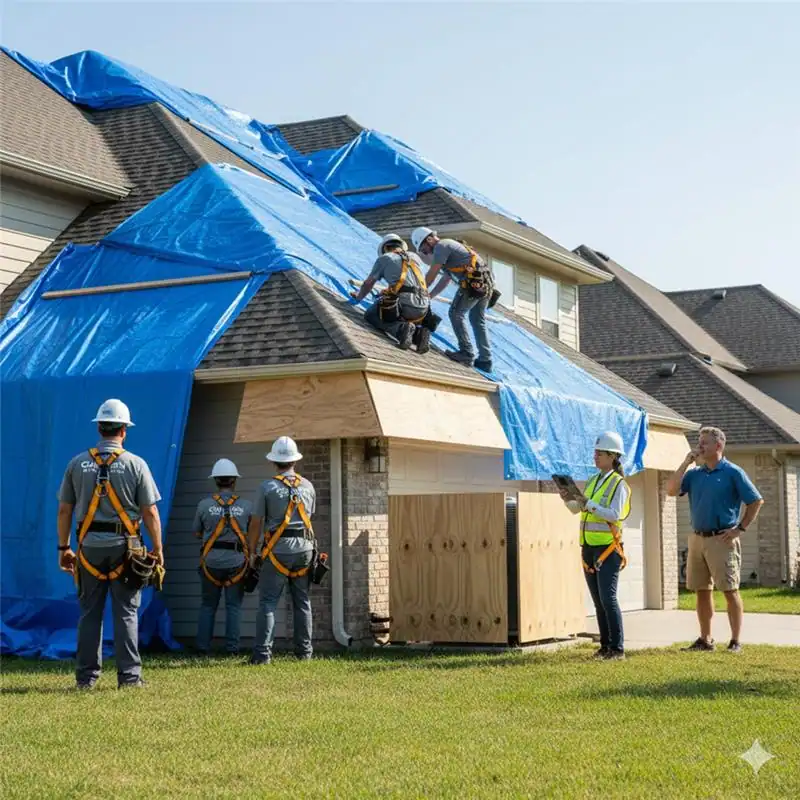
You just finished a full roof replacement. The lines are clean, the crew was efficient, and the client seemed thrilled. You’re ready to collect the final check and move on to the next profitable job. Then, your phone buzzes. It’s the homeowner. “The roof looks great, but… your crew put a bunch of dents in my air conditioner and my gutters are all dinged up.”
Your heart sinks. You know your team used tarps. You know they were careful. But now you’re stuck in a “he said, she said” nightmare that will cost you time, money, and potentially a five-star review.
If this scenario feels painfully familiar, you’re not alone. For roofing company owners across the country, these small, disputed damage claims are a chronic headache. They are the silent profit killers that turn a successful project sour and tarnish your hard-earned reputation. But what if you could virtually eliminate these disputes before they even start?
This isn’t about simply using more tarps. It’s about implementing an ironclad business system that combines operational excellence with smart marketing. In this guide, we’ll dissect this pervasive industry problem and give you a strategic blueprint to protect your profits, streamline your operations, and turn your meticulous process into your most powerful sales tool.
What Are Disputed Tear-Off Damage Claims?
When we talk about disputed tear-off damage, we aren’t referring to a catastrophic accident like a bundle of shingles falling through a skylight. We’re talking about the far more common and frustrating “death by a thousand dents” dilemma.
These are the small, often subjective, claims that arise after a roof tear-off:
- •A dozen small dings on aluminum gutter faces.
- •Bent or crushed fins on a homeowner’s AC condenser unit.
- •Scuff marks or small chips on vinyl siding.
- •Cracked plastic on a landscape light or sprinkler head.
The core of the problem is ambiguity. The homeowner, now inspecting their property with a fine-tooth comb, is certain the damage is new. Your crew, who laid down protection, is just as certain it was pre-existing. Without definitive proof, you’re backed into a corner.
Let’s put some numbers to it. The average cost to repair a section of gutter or have an HVAC technician comb the fins of a condenser unit can range from $150 to $500. It seems minor. But consider a company that installs 150 roofs per year. If just 8% of those jobs result in a disputed claim at an average “goodwill” cost of $300, that’s a $3,600 direct hit to your net profit. This doesn’t even account for the hours your project manager or you, the owner, spend on phone calls, site visits, and coordinating repairs, time that could have been spent selling the next job.
Beyond Tarps: The Real Reasons These Claims Happen
You invest in tarps and tell your crew to be careful. So why do these disputes keep happening? The reasons are rooted in the nature of the job itself and the gap between a roofer’s reality and a homeowner’s expectation.
The Physics of a Roof Tear-Off
Gravity is relentless. During a tear-off, thousands of nails, sharp shingle fragments, and granules rain down. This debris can bounce in unpredictable ways, skittering under tarps or ricocheting off walls to land where you least expect it. Even with comprehensive protection, it’s a statistical probability that some debris will find an exposed surface.
Pre-Existing vs. New Damage
Let’s be honest: when was the last time a homeowner meticulously inspected every fin on their AC unit? For most, it’s never. Your project is often the first time their property has been under such close scrutiny. The dings and dents that have been there for years, caused by hail, a weed whacker, or their own lawnmower, are suddenly discovered and attributed to your crew’s work.
The “Pristine Property” Expectation Gap
Homeowners see the finished product in their minds: a beautiful new roof. They don’t envision the controlled chaos of a construction site. Roofers understand that a job site is inherently messy and that mitigating 100% of minor impacts is nearly impossible. This gap between the homeowner’s pristine expectation and the roofer’s operational reality is the fertile ground where disputes are born.
The True Cost of a Dented Gutter: A Business Breakdown
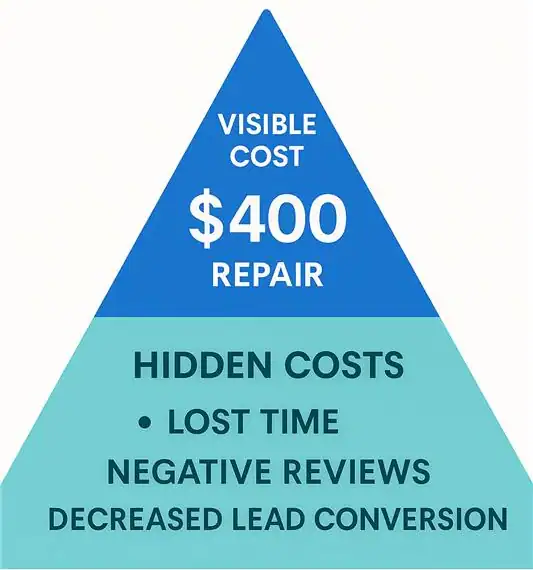
Ignoring these “minor” issues is a critical mistake. The ripple effects of a single disputed claim travel through every department of your business, impacting your bottom line, your operational efficiency, and your brand’s future growth. A simple payout is just the tip of the iceberg.
Let’s break down the true, multi-layered cost to your roofing company.
| Impact Area | Direct Financial Cost | Operational Strain | Brand & Reputation Damage |
|---|---|---|---|
| Description | Immediate cash outlay for repairs, deductible payments, or “goodwill” invoice credits to appease the client. | Non-billable time spent by project managers, owners, and office staff investigating, negotiating, and resolving claims. | Negative online reviews, poor word-of-mouth, and the loss of invaluable future referrals. |
| Example | Writing a $400 check to an HVAC company to comb AC fins. | 6 hours of a project manager’s time ($50/hr = $300) spent on phone calls, a site visit, and scheduling the repair. | A 2-star Google review stating, “The roof is okay, but they damaged my property and were difficult to deal with.” |
| Long-Term Effect | Erodes job profitability, reduces cash flow, and limits your ability to invest in new equipment or marketing. | Pulls your most valuable team members away from revenue-generating activities like sales and production management. | Lowers your ranking in local search, increases customer acquisition costs, and makes it harder to compete against more reputable contractors. |
Fortifying Your Process and Your Brand: A Two-Pronged Defense
The solution isn’t just to buy thicker tarps. The most successful roofing contractors combat this issue with a proactive, two-pronged strategy: they build an ironclad operational process and they leverage that process in their marketing and communication.
Operational Overhaul: The Pre-Job Fortress
Transform your job site setup from a routine task into a systematic defense protocol. It’s about creating irrefutable evidence and setting clear expectations from the start.
Old Way: “My crew lays down tarps and snaps a few photos on their phones before they start.” This is informal, inconsistent, and offers little real protection in a dispute. New Way: The 360° Documentation Protocol.
- •Mandatory Video Walk-Through: Before a single tool comes off the truck, your project manager conducts a detailed video walk-around of the entire property. Using an app like CompanyCam that time-stamps and geotags media is crucial. They must zoom in on high-risk areas: gutters, siding, window screens, landscaping, and especially the AC unit. Narrate the video, clearly pointing out any pre-existing damage (“As you can see here on the north-side condenser unit, there is some existing fin damage consistent with hail.”)
- •The Pre-Job Sign-Off Sheet: Digitize or print a simple checklist that formally acknowledges the property’s condition. List key areas (driveway, siding, gutters, AC unit, landscaping) and have a column for “Pre-existing Conditions Noted.” Have the homeowner sign it. This isn’t about being adversarial; it’s about professionalism and transparency. Frame it as, “We do this to guarantee that we leave your property in the exact same condition we found it.”
- •Protection Plus: Go beyond the standard blue tarp. Use plywood shields to tent over AC units and delicate shrubbery. Invest in foam or plastic gutter guards that clip on to prevent ladder and debris damage. If your budget allows, tools like the Equipter drastically reduce the amount of debris that ever hits the ground.
Marketing & Communication: Setting the Narrative
Your superior operational process is one of the most powerful marketing assets you have, if you use it correctly. You need to sell your process, not just your shingles.
- •Create a “Property Protection Promise” Page: Dedicate a page on your website to your commitment to the homeowner’s property. Use high-quality photos and video of your crew setting up shields, deploying the Equipter, and conducting the video walk-through. This visually demonstrates your professionalism and justifies your price point. This page is a cornerstone of effective Roofing Contractor Content Marketing.
- •Weaponize Your Sales Presentation: During your sales pitch, don’t just talk about warranties. Show the prospect a 30-second clip of your protection process in action. Say, “One of the biggest complaints in this industry is property damage. Let me show you the system we’ve developed to ensure that never happens.”
- •Automate Pre-Job Communication: Two days before the job starts, automatically send the client an email titled “What to Expect During Your Roof Installation.” Include the Pre-Job Sign-Off sheet, a link to your “Property Protection Promise” video, and a brief explanation of the process. This manages expectations and reinforces your value before your crew even arrives.
Is your current website just an online brochure? Our Roofing Marketing Strategies can transform it into a powerful system for setting expectations, building trust, and closing more profitable deals.
From Frustration to Five Stars: A Real-World Scenario
Company: “Pinnacle Roofing,” a mid-sized contractor in suburban Chicago. The Problem: Pinnacle was consistently losing $6,000-$8,000 per year in “goodwill” credits and direct repair costs for disputed minor damages. More painfully, their Google Business Profile was stuck at a 4.3-star rating, with several reviews mentioning arguments over siding scuffs and dented gutters.
The Solution: They implemented the two-pronged defense.
- •Operational: They made the CompanyCam 360° walk-through and a client sign-off sheet mandatory for every job. Any crew failing to comply faced a bonus reduction.
- •Marketing: They hired a videographer to create a professional 90-second video showcasing their “Pristine Property Process,” which they embedded on their website’s homepage and had their sales team text to every new lead.
The Result: In the first year, their disputed damage claims fell by over 85%. On the two occasions a client did raise an issue, they had time-stamped video evidence to clearly and calmly resolve the situation. Because their process was a key part of their marketing, they began attracting clients who valued that level of detail. Their Google rating climbed to 4.9 stars, and new reviews frequently included phrases like “incredibly professional” and “they took amazing care of our home.” This improved their online visibility through better Google Business Profile Optimization, leading to a measurable increase in qualified leads.
Stop Reacting to Damage Claims and Start Preventing Them
Disputed property damage is more than an operational nuisance; it’s a systemic threat to your profitability and brand integrity. Continuing to treat these incidents as the “cost of doing business” is a choice to let your profits and reputation slowly bleed out.
The path forward is clear: a disciplined fusion of a bulletproof operational protocol for documentation and a smart, proactive marketing strategy that communicates your superior process. By documenting reality and managing expectations, you remove the ambiguity where these disputes thrive.
Building this integrated system takes focus. You are an expert at installing roofs. We are experts at building the marketing and communication systems that protect your brand and drive sustainable growth. It’s time to turn your greatest frustration into your most compelling marketing story. Don’t let another dented gutter chip away at your success. Schedule a strategy call with our team today to learn how our specialized Roofing Contractor SEO and Content Marketing services can help you build an unshakeable reputation and attract the high-quality leads you deserve.
Book A CallFrequently Asked Questions
A few random snapshots lack the authority of a system. A comprehensive, narrated, time-stamped video walk-through is a formal business record. When you present this as a standard procedure and share it with the homeowner, it shifts the dynamic from a casual practice to a professional protocol that protects both parties.
It all comes down to framing. Never present it as if you’re expecting a problem. Instead, frame it as a mark of premium service and transparency. Say, “As part of our commitment to total accountability, we document the condition of every property before we begin. This ensures we’re all on the same page and that your home is our top priority.”
Proactive marketing sets expectations long before your crew is on site. When your website and sales pitch highlight your meticulous protection process, you pre-emptively answer a homeowner’s unasked questions and fears. This frames your company as a trustworthy, high-value provider, not just a commodity installer. It attracts better clients and gives you the high ground before any potential conflict can arise.
Calculate both the direct and indirect returns. If a $60/month subscription to a documentation app prevents just one $400 claim, it has paid for itself for half the year. Now add the value of your project manager’s time saved from arguing with clients. Finally, consider the immense value of turning a potential 1-star review into a glowing 5-star review that brings you three more referrals. The ROI is almost always realized within a few months, both in saved costs and increased revenue.